
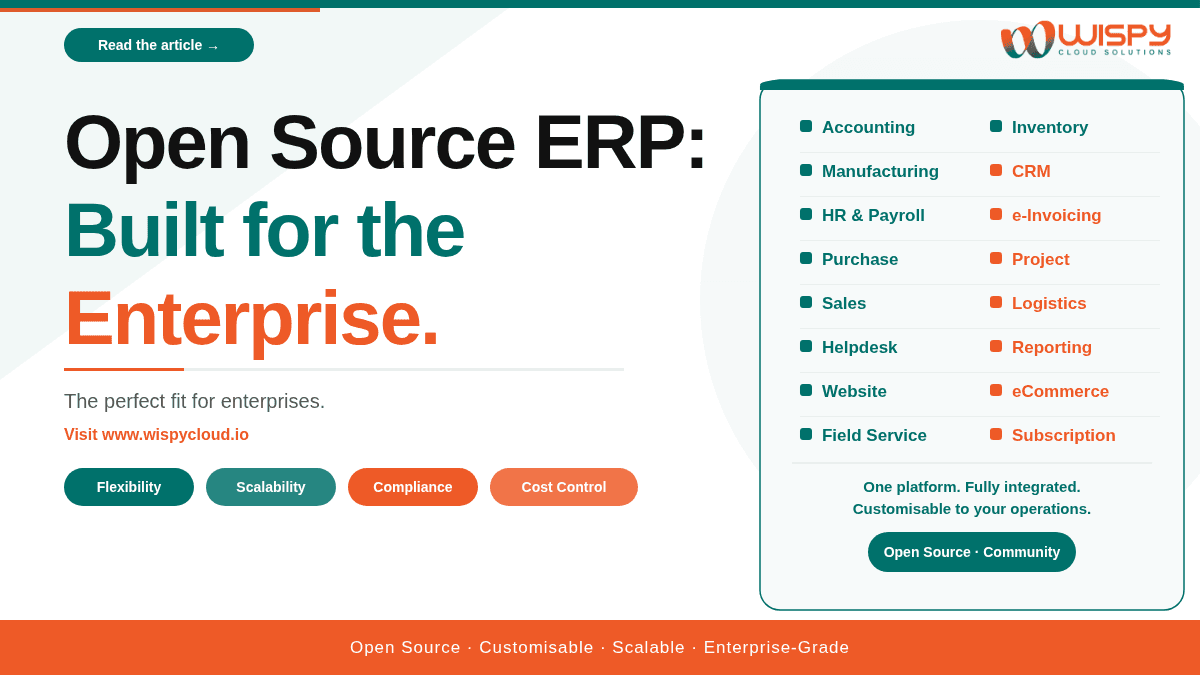
Open source ERP has come a long way. What was once seen as a “startup-friendly” option is now being seriously evaluated by large enterprises.
In 2026, the question is no longer “Is open source ERP viable?” it’s “Is it ready for enterprise-scale operations?”
What Is Open Source ERP? (Quick Answer)
Open source ERP is enterprise software where the source code is accessible, allowing businesses to customize, extend and control their systems without being locked into a single vendor.
Why Open Source ERP Is Gaining Momentum
Companies today want:
- More control over their tech stack
- Flexible customization without vendor restrictions
- Transparent and predictable costs
Market trends reflect this shift. Open source ERP adoption is steadily growing, with increasing investments from both businesses and vendors.
Product Maturity: A Look at Odoo
Odoo is one of the strongest examples of how open source ERP has matured.
Recent versions have introduced:
- Faster performance and improved usability
- Localization features like payroll and e-invoicing
- Stronger compliance support for global operations
These are not small upgrades; they address the exact concerns enterprises have around reliability, scalability and compliance.
Real-World Adoption: It’s Already Happening
Across industries like manufacturing, logistics and retail, companies are successfully using Odoo to:
- Centralize operations
- Reduce manual processes
- Improve order-to-cash cycles
However, one thing stands out consistently:
Success depends heavily on implementation quality and partner expertise.
Where Open Source ERP Still Needs Improvement
Despite progress, a few areas still require attention:
1. Support & Governance
Enterprises need strong SLAs, security updates and long-term support commitments.
2. Compliance & Localization
While improving, some regions still require deeper tax, payroll and regulatory coverage.
3. Integration Capabilities
Enterprises operating multiple ERP systems must integrate seamlessly with all of them.
4. Total Cost of Ownership (TCO)
Lower license costs don’t mean zero cost. Implementation, customization and maintenance must be planned carefully.
The Role of Implementation Partners
A strong partner ecosystem is critical.
Odoo’s growing network of partners and apps gives enterprises flexibility but choosing the right partner is key.
Before selecting one, businesses should evaluate:
- Upgrade practices
- Security standards
- Proven experience in similar industries
Open Source vs Proprietary ERP: Who Wins?
There’s no single winner.
- Proprietary ERP excels in highly regulated, global environments
- Open source ERP stands out in flexibility, cost control and customization
For many organizations, the decision depends on priorities not limitations.
Checklist for Enterprise Adoption
Before choosing open source ERP, ask:
- Do we have clear KPIs and a long-term roadmap?
- Are support and upgrade paths well defined?
- Does it meet compliance requirements across regions?
- Is the implementation partner reliable?
- Have we calculated full TCO, including operations?
Final Verdict: Enterprise-Ready with the Right Approach
Open source ERP is no longer experimental; it’s a serious enterprise contender.
But success isn’t just about the software. It depends on:
- Strong governance
- Skilled implementation partners
- Clear operational ownership
For many businesses, the real question today is:
“Are we ready to manage open source ERP effectively?”
And that shift in thinking is what makes 2026 a turning point.