
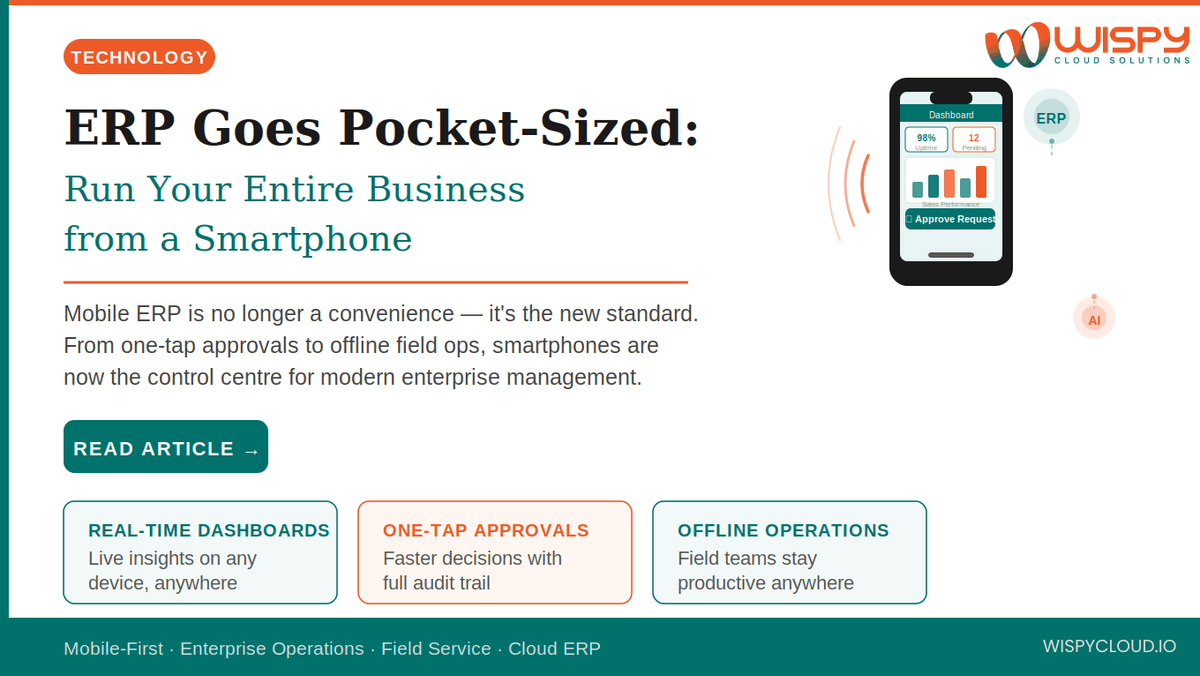
In 2026, the way people interact with ERP has fundamentally changed. Instead of opening laptops, executives, managers and field teams now reach for their phones first.
Modern ERP systems are no longer limited to desktop dashboards; they’re designed to run seamlessly on mobile devices. From approvals to field service tasks, businesses can now manage operations anytime, anywhere, directly from a smartphone.
What Is Mobile ERP?
Mobile ERP is a system that allows users to access, manage and execute business processes like approvals, inventory updates and service tasks through mobile apps on smartphones or tablets.
Why Mobile-First ERP Is Growing Fast
Two major shifts are driving this trend:
- Cloud ERP maturity: Mobile apps now offer full functionality, not just read-only access
- Frontline workforce needs: Teams require offline access, scanning tools and real-time updates
Today’s mobile ERP apps include:
- Biometric login
- Push notifications
- Offline work capabilities
This means work doesn’t stop even without internet connectivity.
Mobile-First Design: Built for Speed and Simplicity
Mobile ERP isn’t just a smaller version of desktop software. It’s designed for quick actions like:
- Approving requests
- Capturing data
- Assigning tasks
- Updating status
Key Features
- Offline-ready forms: Continue working even in low-network areas
- Device-native tools: Camera for receipts, barcode scanning for inventory, GPS for tracking
- Fast navigation: Tap, swipe and act within seconds
These features reduce delays and improve productivity across teams.
Mobile Dashboards: Real-Time Insights on the Go
Mobile dashboards are built for quick decision-making.
They offer:
- Simple, clean layouts for small screens
- Real-time updates with push notifications
- Alerts for approvals, delays, or inventory changes
Instead of checking reports manually, managers are notified instantly when action is needed.
Approvals on Mobile: Faster Decisions, Better Control
Approvals are one of the most powerful mobile ERP features.
Modern systems allow users to:
- Review requests with full context
- Approve or reject in one tap
- Add comments and track history
With secure authentication (biometric + MFA), businesses maintain control while speeding up decision-making.
Field Service: Where Mobile ERP Delivers the Most Value
Field teams rely heavily on mobile ERP.
Key capabilities include:
- Offline job management
- Photo capture for proof of work
- Parts tracking and updates
- Real-time syncing when connectivity returns
This improves:
- First-time fix rates
- Accuracy in service records
- Warranty and audit processes
What to Look for in Mobile ERP in 2026
When evaluating mobile ERP, focus on:
- Native mobile apps (iOS & Android)
- Offline data control and sync settings
- Actionable notifications
- Strong mobile security (biometric + device compliance)
Final Thoughts: ERP Without Boundaries
ERP is no longer tied to a desk.
In 2026, a strong ERP system must deliver:
- Real-time dashboards
- One-tap approvals
- Reliable offline field operations
Businesses that adopt mobile-first ERP gain faster decisions, better productivity and fewer operational bottlenecks.