
Introduction
Picture a single day that hands your small business three things every founder wants but rarely gets all at once: clear next-step tactics, people who can open doors, and tools that actually save time and money. That’s the promise of the CanadianSME Small Business Summit 2025 — a packed, one-day hub where ambition meets practical action for small and medium enterprises across the country. If you run a Canadian SME, here’s why this summit deserves a bold red circle on your calendar.
What, when and where — the practical bits
The CanadianSME Small Business Summit 2025 is scheduled for October 24, 2025 at the Metro Toronto Convention Centre — a central, well-connected venue that makes it easy for delegates from across Canada to attend.
The summit is organized by CanadianSME (the country’s magazine and platform focused on small and medium businesses) and features panels, workshops, exhibitor booths and masterclasses designed specifically for SME leaders.
This summit isn’t fluff — it’s designed for outcomes
Many conferences promise inspiration; this event pairs inspiration with concrete sessions: tax masterclasses, digital adoption how-tos, funding sessions, and practical talks about hiring and scaling, each led by people who actually do this work for SMBs.

The official agenda lists targeted sessions on topics such as Canadian incorporation taxes and how service partnerships can reduce costs — sessions that let you walk out with a checklist, not just notes
Why attending is a business decision, not a luxury
Small and medium-sized enterprise (SME) businesses are paramount to Canada’s economy. In 2023, SMEs represented a substantial share of employment in Canada employing nearly 9.5 million people – over half of total employment in many measures – which means that your business is part of a massive interdependent engine.

Because of the size of SMEs, events that curate SME centric tools, funders, and partners are extremely high-leverage: even one new contact or a funding lead from the event can change your business growth trajectory!
Top practical wins for attendees

- Real funding conversations — Meet lenders, investors and grant partners who specialize in small business. Face-to-face time speeds approvals and helps you learn what they actually look for.
- Plug-and-play vendor matches — Exhibitors bring services for payroll, shipping, banking, HR, and tech. Compare offers, negotiate event-only deals, and leave with clear procurement next steps.
- Masterclasses that fix real problems — Instead of high-level keynote fluff, the summit runs masterclasses on tax, hiring, and technology adoption so you can leave with an action plan.
Practical peer learning — The best ideas are often borrowed from businesses similar to yours. Panels and breakout rooms let you hear what worked (and what didn’t) for real SME owners in Canada.
Networking that works
Large conferences can feel anonymous. This summit is scaled for SMEs and positions networking around problem-solving so your conversations are more targeted.

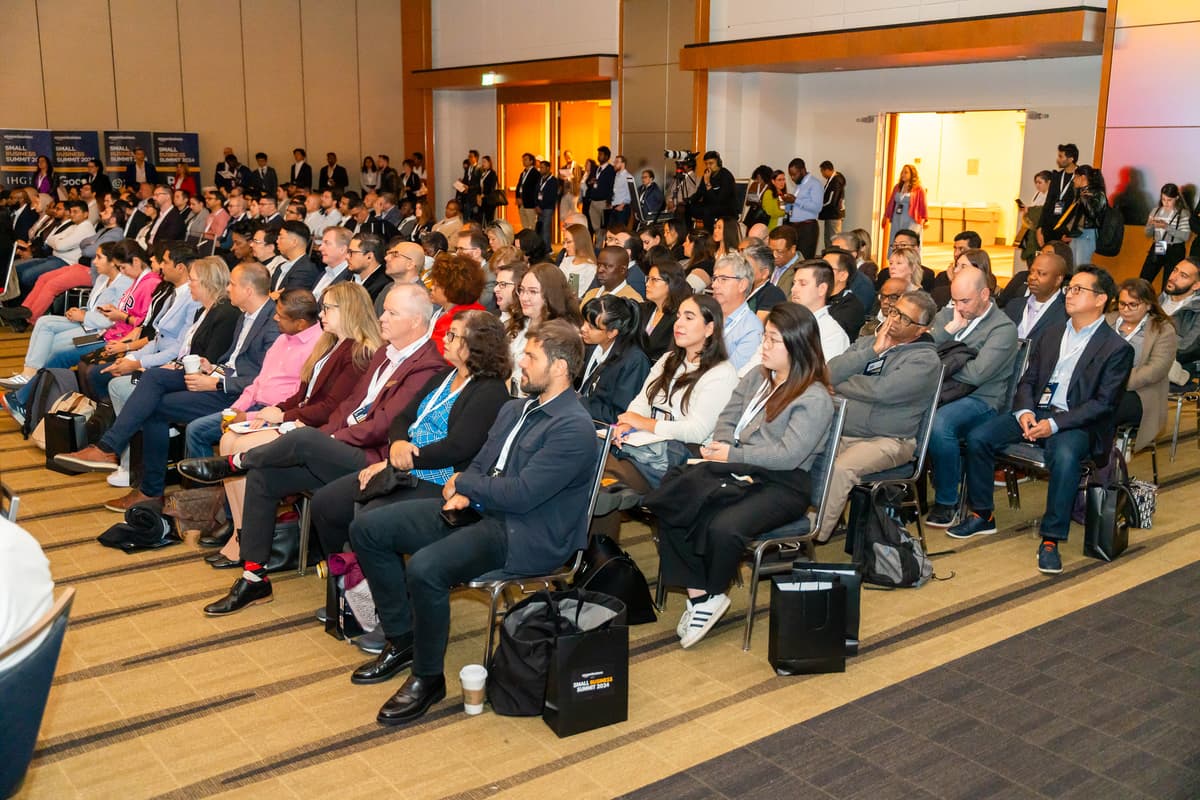
The organizer’s social posts and event pages indicate multi-thousand attendance—meaning a big pool of potential partners, clients, and collaborators in one place. But because the program includes workshops and panels, you get structured settings to find the people who matter.
Who should go (and who should skip)
Go if your business is:
- Looking to scale, hire or export in the next 6–18 months.
- Hunting for partnerships with service providers (banking, shipping, HR) or new B2B clients.
- Seeking funding, or want to better understand tax and compliance for growth.
Skip (or defer) if:
- You’re not ready to implement change in the next year — the summit rewards action-takers.
You want only inspirational content; this event is heavier on hands-on learning.
How to prepare so the day pays off
- Set three clear goals (e.g., “Find one payroll partner”, “get two investor intros”, “attend tax masterclass”).
- Identify five target exhibitors/speakers from the agenda ahead of time and book meetings.
- Prepare a one-minute pitch that explains who you are, the problem you solve, and the specific help you need.
Bring business cards and a short one-pager or slide deck on a tablet — many vendors will want follow-up materials.
Real ROI: what past attendees report
Participants at SMEs events consistently report productive follow-up: vendor deals, client leads and funding conversations.
The format of intense workshops plus exhibitor halls helps transform casual connections into business results, more than they would at larger, more disparate trade shows. The summit’s position as an SME first summit, positions it to turn that potential to conversion.
Final push: this is strategic timing for Canadian SMEs
With digital tools, AI-driven workflows, and export partnerships reshaping how small businesses scale in 2025, the summit puts you in the room with partners and advisors who can turn new tools into profitable outcomes.
Given how central SMEs are to Canada’s employment picture, missing concentrated opportunities to upgrade your business model, find funding, or land scalable vendor deals would be a real missed opportunity